Archive for the ‘grace’ Category
FRIENDSHIP
Why did the Scout bring a ladder to his friends’ campout?
Because he heard friendship was on a whole new level!
Ever have a friend who can lift your spirits even when their own sky is overcast? The kind who seems to carry a little lantern of light just bright enough for two?
Lately, I’ve been thinking about the Scout Law—“A Scout is helpful, a Scout is kind.” Those two alone could heal half the world if we’d let them. Kindness and helpfulness are the tools by which we raise the human spirit.
Not long ago, when life felt heavy and uncertain, a few friends reached out. One offered quiet words of care, another offered practical help—“anything, even the silly household chores.” Somehow that kind of specificity opened a door in my heart. It made it easier to imagine saying yes to help when I needed it.
It reminded me that when we offer to help, it’s not the size of the gesture that matters, but its shape—those small, concrete acts that whisper, “I see you.”
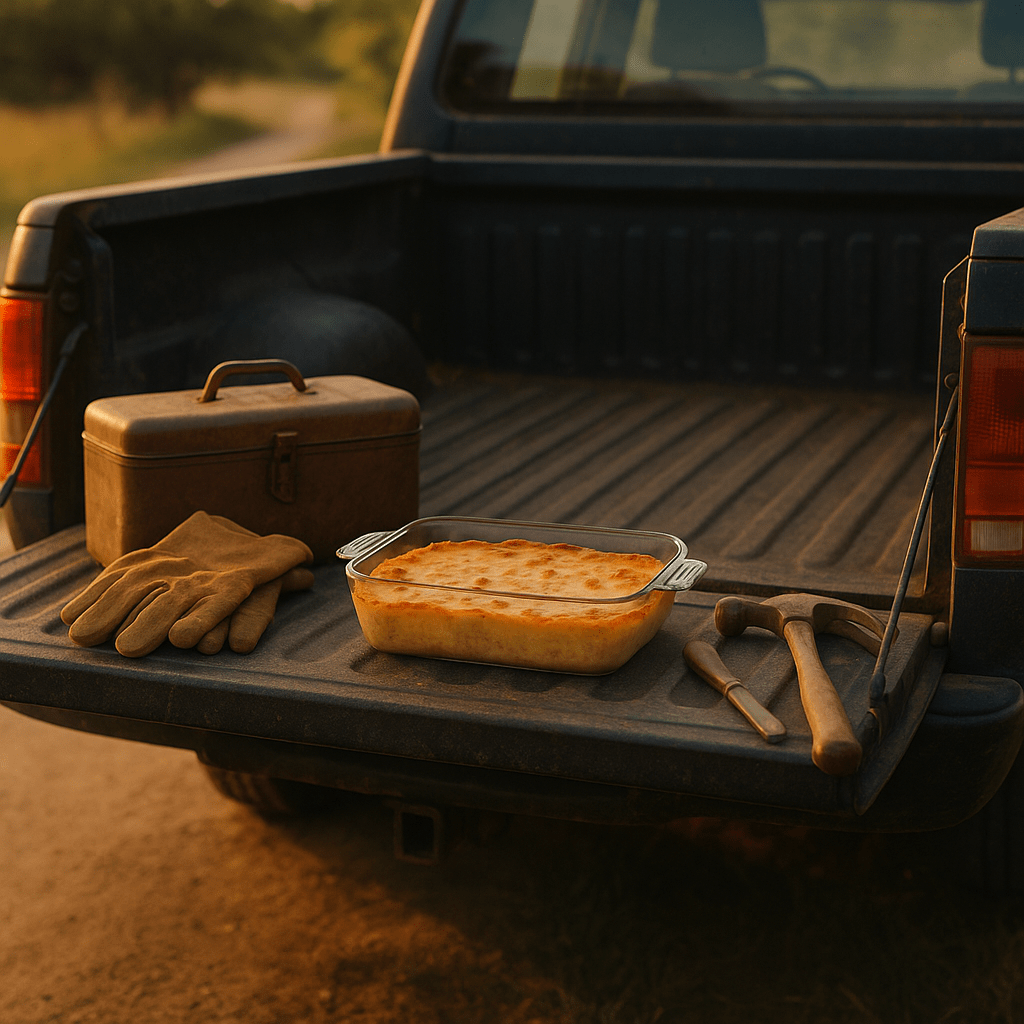
I’ve tried to live that way myself. Bringing a meal, lending a hand, hauling a load, or simply showing up. Not heroic, just human. Little things that make life gentler for someone else.
So that’s my musing today: Find a way—any way—to lift someone’s spirit. Do a small thing that makes a big difference.
Because in the end, friendship might just be God’s way of reminding us that chores and grace often travel in the same truck bed. 🚚
Where All Waters Join
Sometimes grief does not cry out—it drifts, carried by the same current that once bore our joy.
There are moments when loss comes not as thunder but as reflection—when the world stands still, and what we see is not the end but a continuation, changed in form.
I wrote this after a dream of a river and a face that was both Ophelia’s and hers—the one I loved more than life itself.
It is not about death, not really. It’s about arrival: the mystery of the one who was, the one who is, and the one who has yet to come.
I offer it here in gratitude and quiet wonder, a meditation on how love endures beyond the reach of hands.
⸻
I see Ophelia floating, dreamlike,
on the current of a cold river.
The water moves with a whispering insistence,
brushing against stones polished by centuries of sorrow.
Her body is already still,
her face molded by the mercy of the chill
into a child’s perpetual smile.
Then the surface wavers,
and I recognize the curve of her mouth—
not Shakespeare’s daughter of grief,
but the woman I loved more than life itself.
The recognition is the wound.
Not that she is gone,
but that I can no longer feel the warmth
that once made her real.
The ache lives in my hands,
in what they remember
and the water refuses to return.
Yet even as I kneel on the bank,
a strange peace rises.
The river does not end;
it only carries her beyond my reach.
In its mirrored flow I see three arrivals:
the one who was — radiant and laughing in sunlight;
the one who is — still, luminous, beyond decay;
and the one who is yet to come —
the presence that will meet me when my own current slows.
I do not call it faith,
only recognition —
that love does not vanish;
it merely changes address.
The current carries her onward,
and somewhere downstream,
in water not yet visible,
I believe she waits —
not to return,
but to receive.
⸻
And so I let the river keep her, trusting that love, like water, knows its way home.

A lyrical reflection on loss and arrival. Through the image of a woman floating on a twilight river, “Where All Waters Join” explores how love endures beyond separation, and how grief, carried by the current, can become peace.
Blood Is Not Partisan
Blood is the river we all share — given, not chosen.
How many lives would be lost without donors? A stranger’s gift flowing into another’s veins—life itself, offered unseen.
As a boy I dreamed of making a blood pact, binding myself to a friend as “blood brothers.” Only my friend was a girl. What would it mean to cut ourselves and mingle blood across that boundary? Innocence and danger mixed together in one gesture.
Now I wonder: in our divided era, could politics ever stain the gift? Might some refuse to give—or to receive—because of the donor’s convictions? Can blood even have an orientation? Or is it the last unshakable proof of what we share?
I think of the hymn about water and blood flowing from Christ’s side. Blood as salvation, blood as mystery. The chalice in worship. And the old Roman whispers that Christians were child-sacrificers, drinking blood—scandal and holiness poured into one cup.
And then the small, human side: my cousin who fainted at the sight of it. A nosebleed in school was enough to bring him down. Blood terrifies, even as it sustains.
It can save a life, it can signal the end of one, and it can bind us together in ways both strange and holy. Blood is the river we all share—flowing through strangers and kin alike, past every boundary, carrying us toward one another.
P.S. Perhaps the wonder is not that blood is so often spilled, but that it is still given.

Roundabout
A funeral procession circled the roundabout, bound for the cemetery. An impatient driver nosed in, cut between the mourners’ cars, and darted out the other side. The only one not in a hurry was the passenger in the hearse.
We pretend life gives us two choices: hurry, or not. Yet most of us choose hurry and excuse it with refrigerator wisdom: Stop and smell the roses. We don’t. We grumble at those who slow us down, and bristle at those who outpace us.
They say we live in constant change. I wonder if nothing changes—because we never pause to notice. Children leap from infancy to adulthood, and we miss the quiet growth—or quiet loss—of the spirit. We hurry to work, hurry home, hurry on.
And then, in the end, we arrive at the one appointment that never runs late.
The God who receives us is never in a hurry.

God in the Silence
There are silences that wound. The silence between two people who no longer know how to speak to one another. The silence after a loss so great that words cannot carry its weight. The silence of God, or what feels like God’s absence, when prayer becomes little more than breath.
.
I have lived with such silence. I thought it safer than speech, thought it might protect others from the depth of my sorrow. But silence has its own cost. It isolates. It hardens. It makes a person a stranger even to those who love them most.
.
And yet, in Romans Paul dares to say that even silence can be prayer. “The Spirit himself intercedes for us with groans too deep for words.” Which means that what I cannot say, God still hears. What I withhold, God still knows. What weighs me down with unspeakable grief, God lifts up and carries into the very heart of heaven.
.
This is a mystery. That the silence which feels like absence may, in truth, be full of God’s presence. That the groan we never utter may already be on the Spirit’s lips. That even when our mouths are closed, intimacy remains possible.
.
And perhaps this is our calling as servants of Christ—
not always to speak, not always to fix,
but sometimes simply to sit in the quiet with those who cannot speak.
To believe on their behalf.
To let silence be enough.
.
Because in the silence, God is already there.
.

 On a whim...