Archive for the ‘theology’ Category
Finding Our Route
How did the tree get lost in the woods?
He couldn’t find his route.
We may not be trees, but we spend a lot of time searching for a way forward. Sometimes the best choice is simply to pick a direction and start moving. Other times, when we’re truly lost, the wiser course is to stop, sit down, and take stock.
That’s the trouble with life: for almost every situation, there’s more than one plausible answer. Knowledge alone doesn’t always point the way. We need wisdom.
But what is wisdom? I believe it grows out of knowledge and experience together. Yet sometimes it comes as more than the sum of those parts. Sometimes Providence stirs the pot, and God lays a finger in the pudding. And when He does, a path we never imagined clears before us—one that leads not to despair, but to surprising and blessed results.

Let All the Earth Keep Silence…
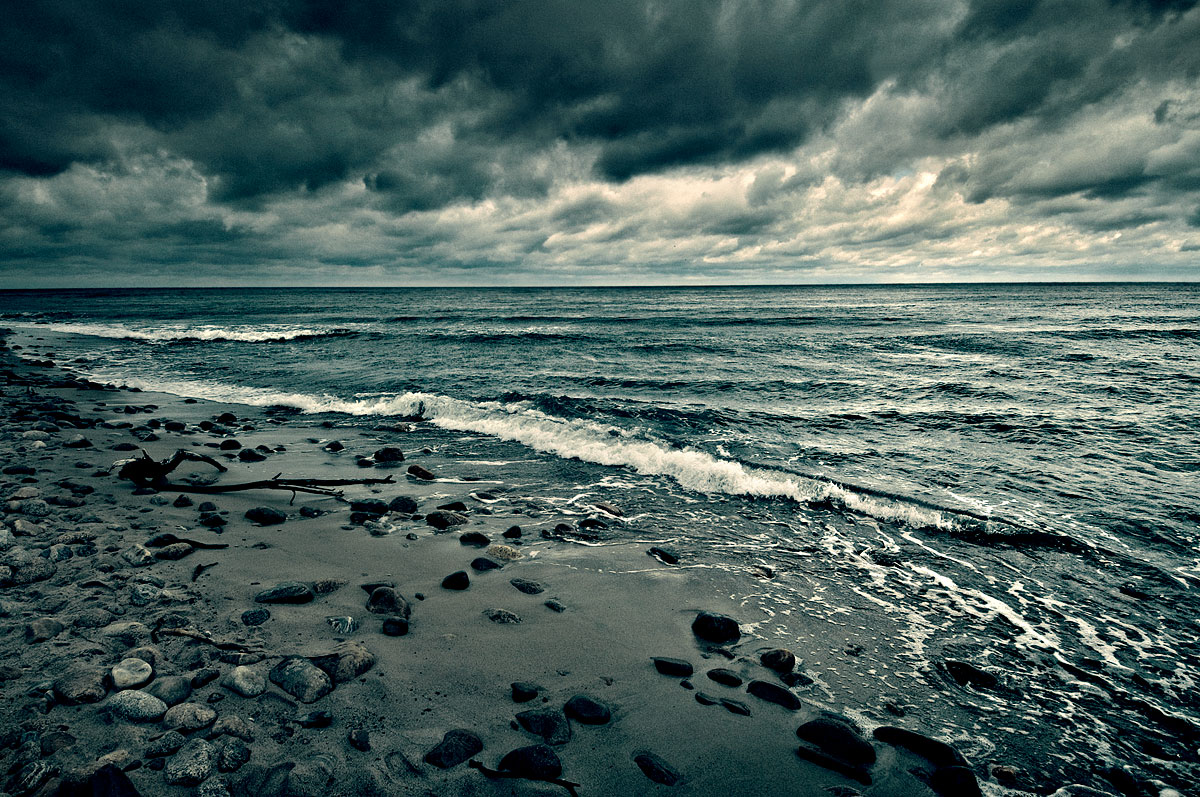
“Speak only if it improves the silence.” Courtesy of Chantelle Says
A friend perished tonight; I want to say ‘faded’. She faded from view. Or maybe I want to say, “she passed”, as they say in the part of Georgia where I came to know a bit more of God than I bargained for. No, just faded. Faded like the sun sinking below the horizon only to rise like the sun from another. Fading out, fading in. Setting and rising; borrowed images that, tonight, belong to others. They make me want to pray.
In her short book, “Help, Thanks, Wow”, Anne Lamott declares that prayer should be simple. I agree, but I want to add, it can still be beautiful. The question is, in whose eyes should such beauty be held? Is it possible to perceive beauty most properly when our hearts are tuned to a pitch heard only in darkest nights, or greatest joys, or deepest yearnings; a beauty encountered in the midst of mystery? Is it probable that what often passes for beauty is noisy and as likely to carry prayers ‘aloft’ as a blossom might drift into the sky borne on the backs of gilded bricks? I need more than bricks tonight.
I want to pray. I want to let a stream of yearning flow from my heart to Another’s. Sometimes words of any kind get in the way of prayer. Of all the prayers I have uttered or heard the most profound was the extended silence that followed when Dr. Raymond H. Bailey halted, mid sermon. He had just declared that we should remain silent that God might speak; the following silence provoked hope in some, joy in others, and (perhaps) surprise. In silence we held our breath and our words. We listened and our hearts found the pitch; we simply and silently prayed. What could be more beautiful?
A friend perished tonight. Her family must surely struggle to find something lost in the shambles; in the midst of their grief I pray.
“But the LORD is in his holy temple: let all the earth keep silence before him.”
– Habakkuk 4:20 KJV
Life in Light
Sun shines over my shoulder. Cascades of light and warmth spill across me and to the north I see long shadows of myself on the floor.
I cannot look into the light but I know of Light’s embrace. I cannot see God but I accept that God is near all the same.
The Divine Recluse
“They say that God is everywhere, and yet we always think of Him as somewhat of a recluse.”
– Emily Dickinson
A philosophy of religion professor I greatly admired said to me that “God is either in everything, or in nothing.” I have often thought of this and think I will never let go, entirely, of the sense that this question is very close to the center of our existential dilemma. The declarative testimony of some preachers often clashes with our own, and often profound, sense that God is a very long way off. Perhaps this is most true of ‘high mileage’ ministers; Ministers who say, week after week, that “God is near” or “God will provide”, or “God is love” while at the same time living lives of personal spiritual desolation.
Saint John of the Cross, a Carmelite monk and famous Spanish mystic of the 16th century, spoke of “The Dark Night of the Soul”. Though I can lay no claim to mysticism due to my own proclivity for skepticism and rational thought I do not believe that the spiritual desolation that many know today can be equated with his experience of exquisite sorrow. For one thing his travail was a stage in a life long journey toward greater awareness of the nearness of God. Ours, by contrast, is a contemporary and increasingly empty wasteland. A wasteland that is the consequence of longing or lust for something other than God.
When I retired from public ministry almost fifteen years ago I was met by objections from colleagues and friends. One, I remember in particular, said, “Don’t do this, you will lose your faith.” Really? I suppose the epicenter of this concern depends on what is meant by faith. What often passes for faith is not faith but enthusiasm for it. That is, what many consider ‘faith’ is an emotional rush associated with tantalizing hope for ________ (fill in the blank with health, wealth, power, the winning lottery numbers). Longing, not faith, is the hallmark emotion of our age. We are obsessed with this sense of longing and the market is eager to exploit the demand. Consider our entertainment, the means by which we create and then fill idle hours. Today the ‘leading brands’ are fueled by longing. American Idol, Next Super Model, The Bachelor/Bachelorette are testimonies to our ambition for something more. In contemporary religion we are all too often exhorted to believe so that we too can have __________ (you may borrow from the previously completed blank).
Week after week the disenfranchised, the wealthy, the overwhelmed, and the overlord exhort their personal deities to grant a boon. And, to assure success, they (we) cry all the louder, “Hear Us!” The regular worship of many takes on the trappings of a pep rally and we, the worshippers, are the fans. Fans of Faith.
It is this kind of “faith” that can be easily lost. And when it is lost the heart of our hearts is a desolate, without relief from the scorching winds of self reproach, doubt, and despair. This is no “Dark Night of the Soul” it is a living hell.
When I first began to compose this piece the juxtaposition of statements by poet, professor and parishioner occupied my mind. In 1993 my wife, deeply loved by me and all her family, died. In the seven years prior to her death we struggled, together. For my own part, I was not so troubled by some sense that God was absent. Instead I was haunted by an inexplicable sense of pervasive good. I began to realize more fully that we live in an ugly world where cancer is part of nature. I saw the compelling evidence that pestilence is an unrelenting condition of life. Likewise, poverty is the norm for most people in this world and yet… in the midst of such a world I held in my heart something mysteriously beautiful. In the fifteen years since then I continue to question many things but what I question most is how could we all seem to miss the outrageous eruption of good in a world so utterly hostile to it.
Far more than the presence or absence of God I am amazed that any of us ever has a sense of God’s presence. We, in spite of ourselves and our distance from conventional means by which we articulate faith continue to be amazed by God. I suppose this is the real meaning of “amazing” in grace.
Tool Time
Been in the basement a lot this week. Making clouds of dust to see what I can produce just short of spontaneous generation. I am reminded of high school when we were taught to politely sneer at the ‘science’ that proclaimed life could emerge ‘spontaneously’ from a pond. How simple minded those pre-enlightenment fools were to think that fish could just spring into existence as if of their own volition.
Today we teach our children an either-or tale of similarly stunning foolishness. We teach them that life either sprang, like Athena, full grown from the divine skull or it popped into being from an accidental combination of various compounds. Maybe we should coin a new phrase to label our own implausible possibility; “the divine mistake”. There was a god who liked to spend time stirring dust in the cosmic basement. Being a careless divinity some etheral compounds leaked onto the pile of molecular debris and, voila (this instance of divinity must be French, of course), life was percolating on the cellar floor.
So, there you have it, perhaps we are the product of a cosmic Tim Allen. Isn’t that just as comforting as the alternatives offered by the battalions of opinionated critters engaged in our current cultural war?
 On a whim...